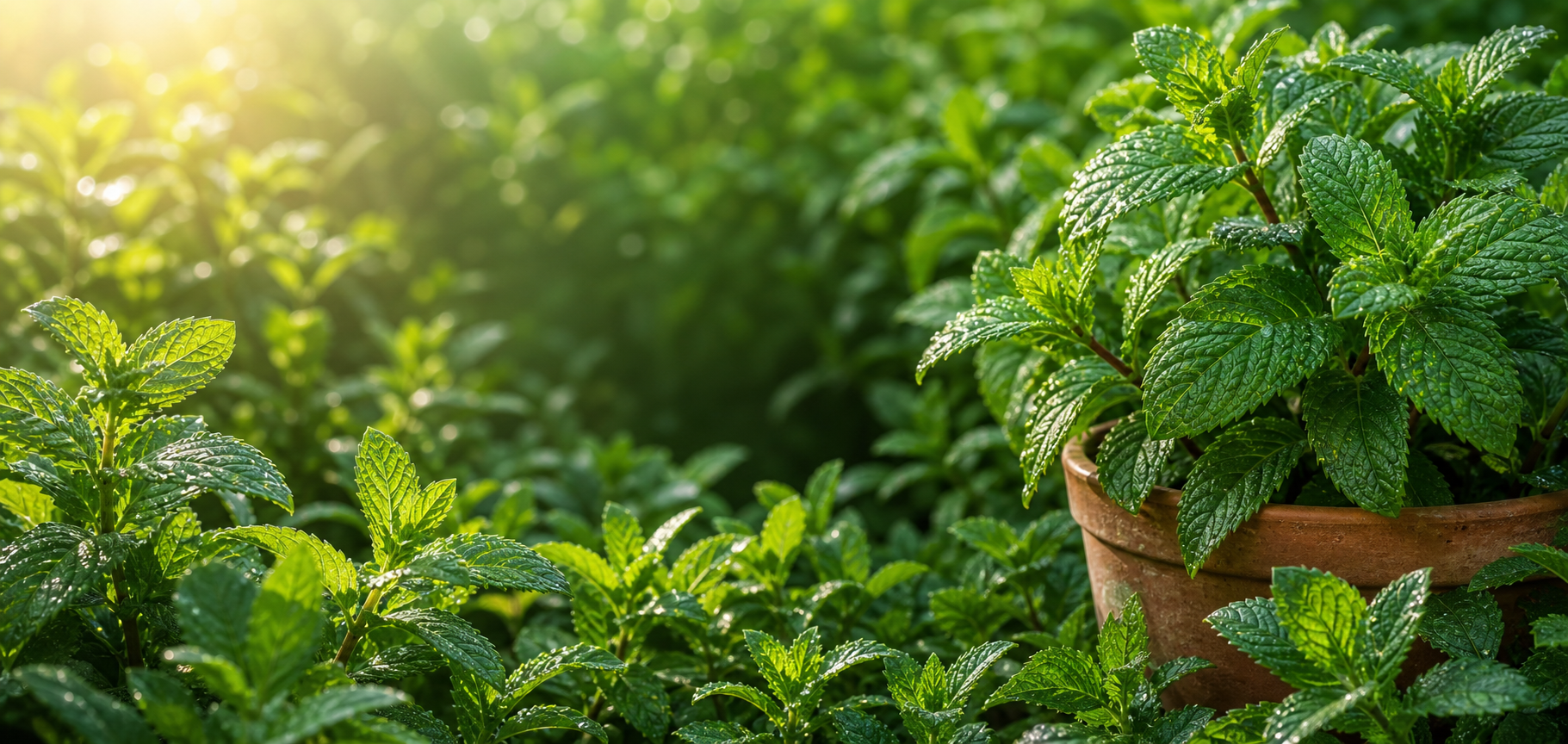
Four to six hours of sun is ideal in many gardens. In hot regions, give afternoon shade.
Growing Guide
How to grow mint that stays lush, fragrant, and under control.
Mint is one of the easiest herbs to grow, and one of the most determined. The best mint gardens start with bright morning light, steady moisture, regular harvests, and a plan for containing the roots before they wander.
4-6 hours morning sun
12+ inch container
Weekly pinching
Start with mint's deliciously determined personality.
Mint wants cool roots, bright light, rich soil, and room to run. If those needs are met, it grows quickly from spring through fall and can supply a kitchen for months. The main gardening job is shaping that energy: choose a container or root barrier, water consistently, pinch often, and refresh the plant before stems become woody.
Water when the top inch of soil feels dry. Containers may need daily water in heat.
Use compost-rich soil that holds moisture without staying soggy.
Most mints spread by underground runners. Pots are usually the friendliest choice.
Quick Start
Three habits make mint behave.
- Pot it generously.Give one plant a roomy container with drainage before runners reach the garden bed.
- Water before stress shows.Check the top inch of soil and soak the full root ball when it feels dry.
- Pinch the tips often.Cut above leaf pairs every week for fuller stems and sweeter kitchen harvests.
Climate & Geography
Where mint grows best.
Mint is broadly adaptable. Spearmint, peppermint, apple mint, chocolate mint, and many culinary mints grow well across much of North America, Europe, and other temperate regions. Many common types are perennial in cold-winter climates, especially when planted in the ground or kept in a protected container. In very hot, dry, or tropical climates, mint usually grows best as a cool-season herb or in partial shade.
Cold winter regions
In many USDA Zones 3 to 6, mint dies back after frost and returns from the roots in spring. Use a thick mulch after the ground cools, and protect pots from repeated freeze-thaw cycles.
Mild temperate regions
Zones 7 to 9 are often excellent mint territory. Plants may stay green through light frosts and grow vigorously in spring and fall.
Hot summer regions
In the inland South, Southwest, and other hot climates, choose morning sun and afternoon shade. Containers need larger soil volume and more frequent watering.
Coastal and maritime areas
Cool air, humidity, and moderate sun can produce tender leaves. Watch drainage during rainy periods so roots are moist, not waterlogged.
Arid and high-desert areas
Grow mint where it gets filtered light, wind protection, and reliable irrigation. Mulch the pot surface to slow evaporation.
Subtropical and tropical areas
Mint may struggle in relentless heat and humidity. Treat it as a winter or shoulder-season herb, grow it in bright shade, and replace tired plants when stems turn coarse.
Site & Weather
Choose a place with bright light, cool roots, and wind protection.
Mint makes its best leaves in moderate weather. The ideal growing range is cool to warm rather than blazing hot: spring, early summer, and fall are often peak seasons. The plant tolerates full sun where summers are mild, but in hot weather the leaves stay softer and greener with shade after lunch.
- Light: Give four to six hours of direct light or a full day of bright filtered light. Morning sun is usually better than late-afternoon sun.
- Heat: When temperatures stay above the upper 80s F, move pots to partial shade and water before the plant wilts.
- Cold: Frost blackens top growth, but established roots often survive winter. Containers are more vulnerable because roots freeze faster above ground.
- Wind: Hot wind dries mint quickly. Use a sheltered patio, a wall, or taller neighboring plants to reduce stress.
- Rain: Mint enjoys rain, but standing water invites root problems. Every pot needs drainage holes.
Planting
Plant mint from starts, divisions, or cuttings.
Mint is usually more predictable from a nursery plant or cutting than from seed. Seed-grown mint can vary in flavor, while named plants preserve the aroma you chose. Smell the leaves before buying: spearmint is sweet and green, peppermint is sharper and cooler, apple mint is soft and fruity, and chocolate mint has a rounded cocoa-like scent.
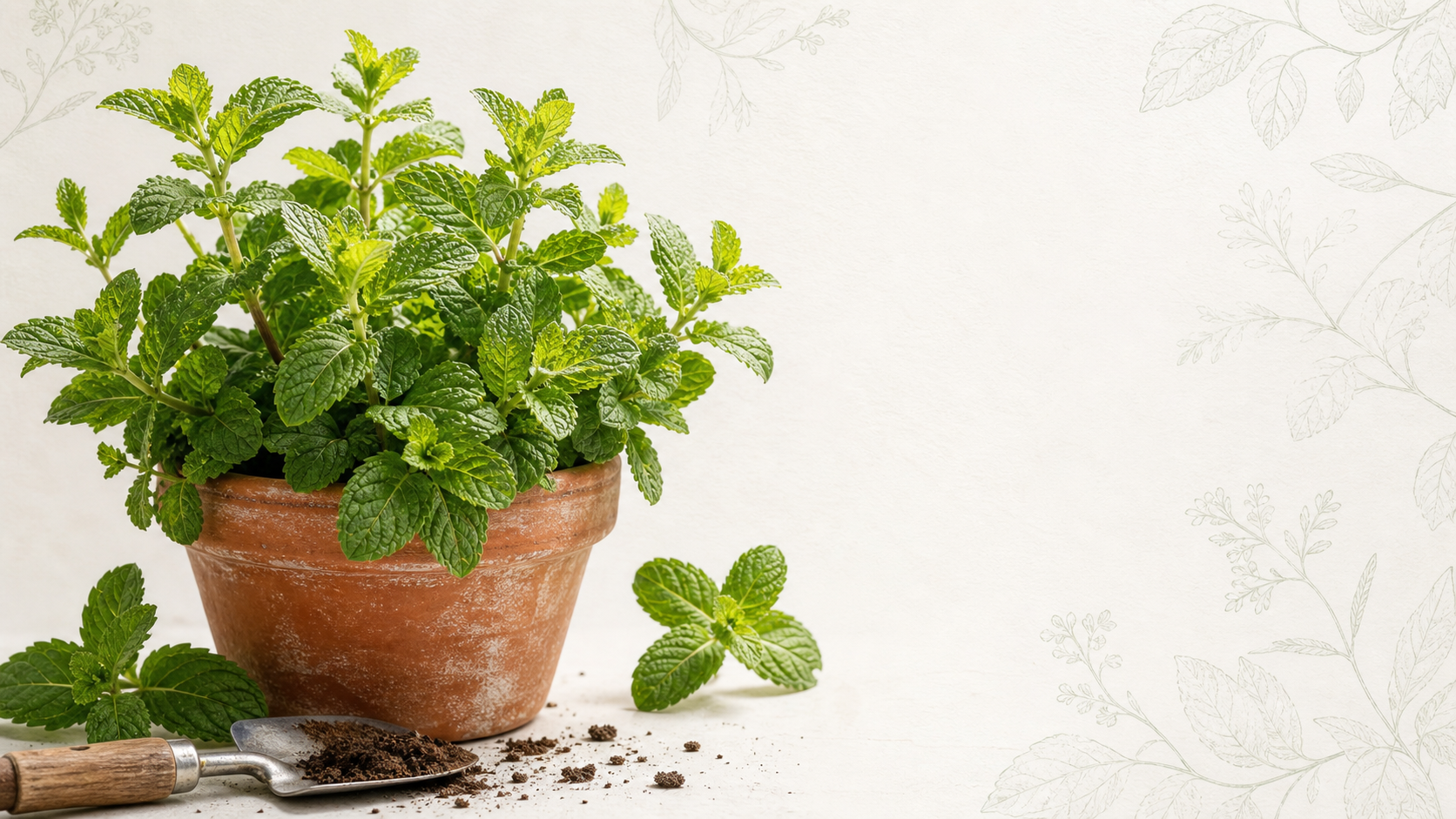
- Pick the container first. Choose a pot at least 12 inches wide for one plant; 14 to 16 inches is better for a season-long kitchen supply.
- Use fresh potting mix. Blend quality potting mix with compost. Avoid dense garden soil in pots because it compacts and drains poorly.
- Plant at the same depth. Keep the crown level with the soil surface. Burying stems too deeply can encourage rot.
- Water deeply after planting. Soak until water exits the drainage holes, then let the top inch begin to dry before watering again.
- Pinch early. Once the plant resumes growth, pinch the tallest tips to encourage side shoots.
Watering
Keep mint evenly moist, not swampy.
Watering is the difference between plush mint and tough mint. The leaves are thin, the stems grow fast, and containers dry from every side. Check with a finger rather than a calendar: when the top inch feels dry, water thoroughly.
- In beds, aim for about 1 inch of water per week, more during heat or drought.
- In pots, water until the full root ball is wet and excess water drains out.
- On hot patios, check containers daily. Small pots may need water twice on extreme days.
- Mulch with shredded leaves, straw, or fine bark to cool soil and reduce evaporation.
- Yellow lower leaves plus wet soil can mean overwatering or poor drainage.
Finger test
Push a finger 1 inch into the soil.
Dry: water now. Cool and slightly damp: wait. Soggy: improve drainage.Containers & Control
Contain mint before it starts exploring.
Mint spreads by runners that can slip through beds and around neighboring plants. A container is the simplest solution. If you want mint in a bed, plant it inside a large bottomless pot or root barrier sunk into the soil, and inspect the edges several times a year. Any escaping runner should be lifted immediately.
Best everyday setup
A 14- to 16-inch pot with drainage, compost-rich potting mix, and morning sun near the kitchen door.
Balcony setup
A self-watering planter or deep trough. Use wheels or a plant caddy if afternoon sun gets intense.
Garden bed setup
A buried barrier with 2 inches left above soil level. Check monthly for runners crossing the rim.
Refresh schedule
Every 1 to 2 years, lift the plant, keep the healthiest outer sections, and replant in fresh mix.
Care Calendar
What to do through the year.
Plant, divide, and feed lightly.
Set out plants after the hardest freezes pass. Divide crowded pots, add compost, and begin pinching once new stems are 4 to 6 inches tall.
Water deeply and harvest often.
Cut stems weekly for bushy growth. Move stressed pots out of harsh afternoon sun. Remove flower spikes unless you want blooms for pollinators.
Take cuttings and clean up.
Root a few cuttings indoors, trim tired stems, and refresh mulch. Fall is also a good time to divide strong clumps in mild climates.
Protect roots, not leaves.
Outdoor top growth may die back. Move containers against a sheltered wall, sink pots into soil, or keep a small cutting indoors in bright light.
Harvest & Pruning
Harvest like pruning, and pruning becomes harvest.
The best harvests come from regular cuts, not occasional stripping. Cut stems just above a pair of leaves, and the buds at that node will branch into two new stems. Morning harvests usually have the best aroma, especially before heat and wind pull moisture from the leaves.
For a garnish
Pinch the tender top 2 to 4 inches. Use the small leaves whole or tear them just before serving.
For tea or syrup
Cut longer stems before flowering. Rinse, shake dry, bruise lightly, and steep covered to trap aroma.
For a plant reset
Cut the whole plant back by one third to one half, water well, and let fresh shoots replace tired growth.
For storage
Stand stems in a jar of water in the refrigerator, dry leaves in a single layer, or freeze chopped leaves in ice cube trays.
Troubleshooting
Read the plant before reaching for a fix.
| Wilting in afternoon | Heat, dry soil, small pot, or wind. Water deeply, add mulch, and move the pot to afternoon shade. |
|---|---|
| Yellow lower leaves | Soil may be too wet, too dry, or depleted. Check drainage first, then refresh compost if roots are healthy. |
| Leggy stems | Not enough light or not enough pinching. Move to brighter morning light and cut back above leaf pairs. |
| Powdery coating | Often poor airflow plus humidity. Thin crowded stems, water soil rather than leaves, and remove badly affected growth. |
| Tiny pests | Aphids, mites, or whiteflies may gather on tender tips. Rinse with water and harvest clean growth after the plant rebounds. |
| Woody or harsh flavor | The plant is old, stressed, or flowering. Cut back hard, water well, and harvest the new flush. |
| Runners escaping | Lift them immediately. If mint is in a bed, move it to a pot before it colonizes nearby soil. |
Kitchen Garden Habit
Grow mint where you will actually use it.
The best mint plant is close enough to pinch while tea steeps, dinner finishes, or fruit is sliced. Give it a generous pot, morning light, regular water, and a weekly trim, and it will keep turning simple food into something bright.