Cut after dew dries but before harsh heat. Leaves should be perky, aromatic, and free from yellowing or mildew.
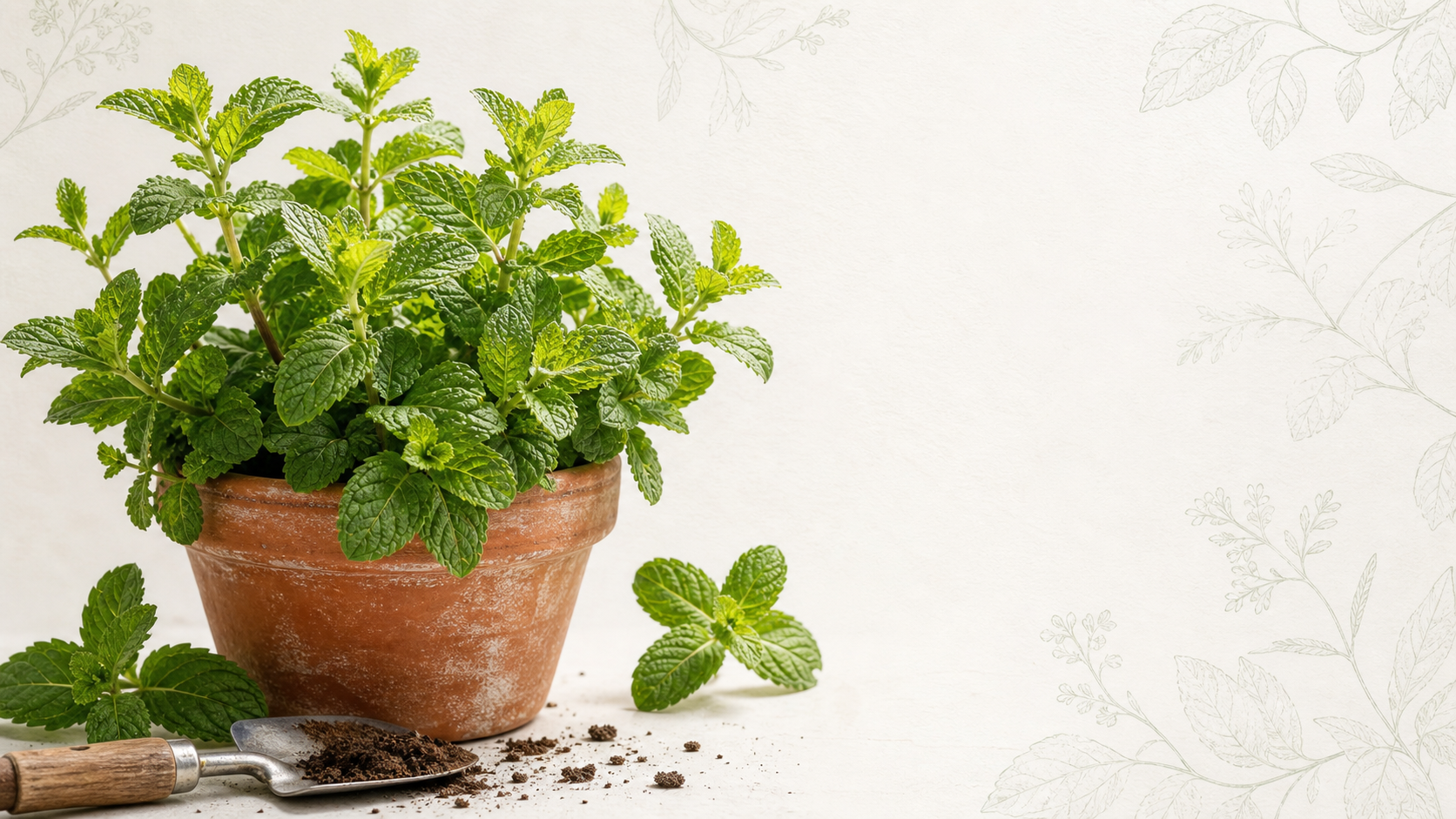
Preserve Mint
Keep fresh mint bright long after the harvest rush.
Mint is generous, fragrant, and famously quick to wilt once cut. The trick is matching the preservation method to the way you want to use it later: tender leaves for tomorrow's salad, dried mint for winter tea, frozen cubes for drinks, or mint syrups and salts for the pantry.
1 hour from harvest to storage is ideal
7-10 days for fresh stems in the refrigerator
6-12 months for dried or frozen mint at best quality
Preserving mint starts before the leaves leave the stem.
Mint's flavor is carried in volatile aromatic oils, which means it fades when leaves are bruised, heated too hard, exposed to air, or stored damp in a sealed container. A beautiful preservation plan is less about doing one dramatic thing and more about moving quickly, drying surface moisture, choosing the right format, and protecting the finished mint from light, heat, oxygen, and freezer burn.
Trim stems, stand them in water, cover loosely, and refrigerate for the closest thing to just-picked mint.
Dry leaves gently and store them whole. Crush only when using so the aroma stays protected longer.
Freeze chopped mint with water, citrus, syrup, or oil depending on whether it is headed for drinks, sauces, or cooking.
Choose A Method
Let the future recipe decide the preservation method.
Fresh, dried, frozen, sweetened, salted, and steeped mint all behave differently. Pick the format that supports the dish instead of forcing one method to do everything.
For garnish, salads, herb plates, and last-minute tearing.
Best when texture matters and the leaves need to look alive.
For tea, spice blends, rubs, and cooked dishes.
Best when shelf life matters more than tender leaf texture.
For sauces, drinks, soups, grains, and cooked food.
Best when flavor matters but limp thawed leaves will be hidden.
For syrups, sugars, vinegars, salts, and condiments.
Best when mint should become an ingredient you can spoon, splash, or sprinkle.
Quick Start
Three moves protect mint's clean flavor.
- Cool it fast.Bring harvested stems indoors, remove damaged leaves, and keep them out of direct sun while you sort.
- Dry the surface.Rinse only if needed, then spin or blot leaves thoroughly so storage moisture does not become rot.
- Seal the aroma.Use airtight jars, freezer bags with the air pressed out, or covered containers once the mint is fully dry or frozen.
Harvest Prep
Start with clean, dry, lively mint.
Preservation cannot improve weak leaves. It can only protect what is already there. Choose stems with strong color, flexible tips, and a clear fragrance when rubbed. Skip leaves that are yellow, blackened, spotted, dusty with mildew, bug-chewed beyond saving, or already limp from heat.
When to harvest
Morning is best after dew has dried. The plant is hydrated, the leaves are cool, and the aroma is strong. Avoid cutting during the hottest part of the day unless you are rescuing stems before a storm or pruning a plant that has gotten too large.
How much to cut
For an established plant, cut stems just above a leaf pair and avoid taking more than one third to one half of the plant at once unless you are intentionally resetting it. For a small new plant, pinch only the top few inches.
Washing
If the mint is clean, a quick shake may be enough. If it needs washing, swish stems gently in cool water, lift them out instead of pouring grit back over them, and dry them well in a salad spinner or clean towel.
Sorting
Separate tender tips, sturdy leaves, woody stems, flower spikes, and blemished pieces. Tender tips are best fresh; sturdy leaves dry and freeze well; woody stems can flavor syrup or tea before being strained out.
Fresh Storage
Keep tender leaves alive as long as possible.
Fresh storage is the right choice when you want mint for garnishes, salads, fresh rolls, herb platters, tabbouleh, chutneys, yogurt sauces, cocktails, lemonades, or anything where the leaves should still look and feel fresh. The goal is hydration without trapped wetness.
- Trim the stems. Cut a small amount from the stem ends so they can drink.
- Use a jar. Add about an inch of cool water and stand the stems upright like flowers.
- Cover loosely. Place a produce bag or reusable cover over the leaves without crushing them.
- Refrigerate. Keep the jar away from the coldest back wall where leaves can freeze.
- Change the water. Refresh it every day or two, removing any yellow or slimy leaves.
For loose leaves, wrap them in a barely damp towel, tuck the bundle into a lidded container, and refrigerate. Do not seal wet leaves tightly in a bag; that creates the bruised, dark, swampy failure most people blame on the herb.
Drying
Dry mint gently for tea, rubs, and pantry cooking.
Dried mint is not a substitute for fresh garnish, but it is wonderful in hot tea, iced tea, herb blends, lentil soups, yogurt sauces, meat rubs, roasted vegetables, grains, and winter cooking. The best dried mint tastes green, cool, and slightly sweet. The worst tastes like dusty hay. The difference is usually heat, light, and storage.
Air-dry small bundles.
Tie 4 to 6 clean stems together, hang them upside down in a dry, shaded, airy place, and wait until leaves crumble easily. Small bundles dry more evenly than thick bunches.
Dry leaves on a screen.
Strip leaves from stems and spread them in a single layer on a mesh rack, cooling rack, or towel-lined tray. Turn occasionally until crisp.
Use a dehydrator on low.
Set the dehydrator to a low herb setting, usually around 95 to 115 degrees F if your machine allows it. Check often; thin mint leaves can finish quickly.
Oven-dry only with care.
Use the lowest setting, keep the door slightly open if needed, and check frequently. Ovens run hot, so this method can dull the flavor if you walk away.
- Know when it is dry: Leaves should crumble cleanly. If they bend, feel cool, or clump in a jar, they still contain moisture.
- Condition before storing: Place dried leaves loosely in a jar for a few days and watch for condensation. If moisture appears, dry them longer.
- Store whole: Whole dried leaves keep aroma longer than powdered mint. Crush them between your fingers when you cook.
- Protect from light: Use a dark cupboard, tin, amber jar, or labeled paper bag inside an airtight container.
Freezing
Freeze mint when you want flavor more than texture.
Frozen mint will not thaw into pretty garnish. The cells collapse, the leaves darken, and the texture softens. That is completely fine when the mint is destined for lemonade, iced tea, smoothies, soups, sauces, chutneys, marinades, grains, or cooked vegetables.
Whole leaves
Freeze dry leaves flat on a tray, then move them to a bag. Use them quickly because whole leaves are more exposed to freezer air.
Water cubes
Chop mint, pack it into ice cube trays, cover with water, freeze solid, and transfer cubes to a freezer bag for drinks and sauces.
Citrus cubes
Freeze chopped mint with lemon or lime juice for seltzer, lemonade, fruit salad dressing, marinades, and quick yogurt sauces.
Oil cubes
Use olive oil for savory cooking only. Add cubes to soups, beans, grains, roasted vegetables, or pan sauces, not to cold drinks.
Syrups & Sugars
Turn mint into something spoonable, pourable, or sprinkleable.
Sweet preserves are perfect for mint that will end up in drinks, fruit, desserts, tea, whipped cream, yogurt, granita, or baked goods. These methods capture mint's aroma in sugar, which makes the flavor easy to use on a busy day.
Mint simple syrup
Combine equal parts sugar and water, heat until dissolved, remove from heat, add a generous handful of mint, cover, and steep 20 to 30 minutes. Strain, chill, and use for lemonade, iced tea, coffee, fruit, mocktails, or sorbet. Refrigerate and use within about 2 weeks.
Cold-steep syrup
For a greener flavor, muddle mint lightly with sugar, add water, and refrigerate several hours before straining. It tastes fresher but is more perishable, so keep it cold and use it promptly.
Mint sugar
Pulse dry mint leaves with sugar until fragrant, then spread the sugar on a tray to dry before storing. Use on citrus, berries, shortbread, tea rims, chocolate desserts, or yogurt.
Mint honey
Stir chopped dry leaves or briefly warmed sprigs into honey, let the flavor infuse, then strain if desired. Use clean, dry leaves and store cool. If fresh leaves add moisture, refrigerate and use quickly.
Savory Preserves
Build mint into the ingredients you already reach for.
Mint is not only for sweet tea and desserts. Preserved in savory forms, it can brighten beans, lamb, fish, roasted vegetables, salads, grain bowls, eggs, noodles, soups, and yogurt sauces. The key is pairing mint with the right carrier: acid for brightness, salt for finishing, fat for cooking, and herbs for sauces.
Mint vinegar
Pack clean, dry mint into a jar, cover with white wine vinegar or apple cider vinegar, steep in the refrigerator or a cool dark place, then strain. Splash into vinaigrettes, cucumber salads, lentils, cabbage slaws, and quick mint sauce.
Mint finishing salt
Pulse very dry mint with flaky salt or kosher salt, spread until fully dry, then store airtight. Sprinkle on tomatoes, melon, grilled lamb, potatoes, feta, cucumbers, or roasted carrots.
Mint compound butter
Mix softened butter with minced mint, lemon zest, pepper, and a pinch of salt. Roll, chill, and freeze slices for peas, potatoes, fish, carrots, corn, or warm flatbread.
Mint herb paste
Blend mint with parsley or cilantro, olive oil, lemon, garlic, and salt. Freeze in small portions. Stir into yogurt, beans, couscous, sandwiches, soups, and marinades.
Mint pesto
Use mint as part of a mixed-herb pesto with basil, parsley, walnuts or almonds, garlic, lemon, olive oil, and cheese if desired. Freeze flat in a bag so you can break off pieces.
Chutney base
Blend mint with cilantro, green chile, lime, cumin, and salt, then freeze in small containers. Add fresh yogurt, coconut, or water after thawing to revive the texture.
Tea & Blends
Make dried mint easier to use by blending it with purpose.
A jar of plain dried mint is useful, but a few finished blends make winter tea and cooking feel effortless. Keep blends in small batches so the aroma stays lively, and write the date on the jar. For tea, use roughly 1 to 2 teaspoons dried herbs per cup, steep covered, and adjust from there.
Everyday mint tea
Dried mint leaves on their own. Clean, simple, and good hot or iced.
Garden calm blend
Mint, lemon balm, chamomile, and a little lavender. Keep lavender light so it does not turn soapy.
Digestive-style kitchen blend
Mint, fennel seed, ginger, and a little lemon peel. Fragrant and warming without losing mint's cool finish.
Green tea mint
Dried mint with green tea. Brew with water below boiling so the tea stays smooth.
Chocolate dessert blend
Mint, cacao nibs, vanilla sugar, and a tiny pinch of cinnamon. Good with milk or as a dessert tea.
Cooking blend
Mint, oregano, parsley, lemon zest, and black pepper for lamb, potatoes, chickpeas, yogurt, and roasted vegetables.
Storage & Safety
Good preservation is clean, labeled, and honest about shelf life.
Mint is a low-acid fresh herb. That matters because fresh herbs trapped in oil, warm syrup, or damp jars can spoil. Most home mint preserves are best treated as refrigerator or freezer foods unless they are fully dried. When in doubt, make smaller batches more often.
| Fresh stems | Refrigerate in water under a loose cover. Change water often and discard slimy stems. |
|---|---|
| Dried mint | Store only when crisp and fully dry. Use airtight containers away from heat and light. |
| Mint syrup | Refrigerate in a clean bottle and use within about 2 weeks. Freeze for longer storage. |
| Mint in oil | Keep refrigerated and use quickly, or freeze in small portions. Do not store fresh herb oils at room temperature. |
| Infused vinegar | Use clean jars and fully submerged herbs. Strain when the flavor is strong enough and keep cool. |
| Mold or off smells | Discard the batch. Do not scrape mold from herbs, syrups, pastes, or refrigerated preserves. |
Troubleshooting
Small handling choices explain most mint storage problems.
If mint turns black, tastes flat, or smells stale, the cause is usually moisture, heat, age, or too much bruising before storage. The fix is rarely complicated: start with better leaves, dry them more thoroughly, lower the heat, use smaller containers, and label everything.
| Leaves turn black in the fridge | They were too wet, too cold, crushed, or sealed without airflow. Store stems upright with a loose cover or wrap dry leaves in a barely damp towel. |
|---|---|
| Dried mint tastes dull | It may have dried too hot, sat in sunlight, or been crushed too early. Dry gently and store whole leaves in a dark place. |
| Jar shows condensation | The mint was not fully dry. Remove it from the jar immediately and dry longer before storing again. |
| Frozen cubes taste icy or stale | They absorbed freezer air. Move frozen cubes to a tight bag, press out air, and use within the best-quality window. |
| Syrup tastes weak | The mint may have steeped uncovered, boiled too long, or been too sparse. Use more leaves, steep covered off heat, and strain when fragrant. |
| Tea tastes grassy | Leaves may be old, overheated, or oversteeped. Try fresher dried mint, covered steeping, and a shorter brew. |
| Herb paste tastes muddy | Mint can dominate when blended too long or mixed with tired herbs. Balance with parsley, cilantro, lemon, salt, and just enough oil. |
A Full Pantry From One Pot
Preserve mint in more than one form and the plant becomes useful all year.
Keep a jar of fresh stems for this week, a tray of cubes for drinks and sauces, a small bottle of syrup for fruit and tea, and a dark jar of dried leaves for winter. Mint is fleeting when ignored, but wonderfully practical when preserved with a plan.